Practical · Visiting Barcelona
Getting around Barcelona
How to get from the airport to the city, which metro ticket to buy, and when to walk, cycle or take a taxi — explained in plain English.
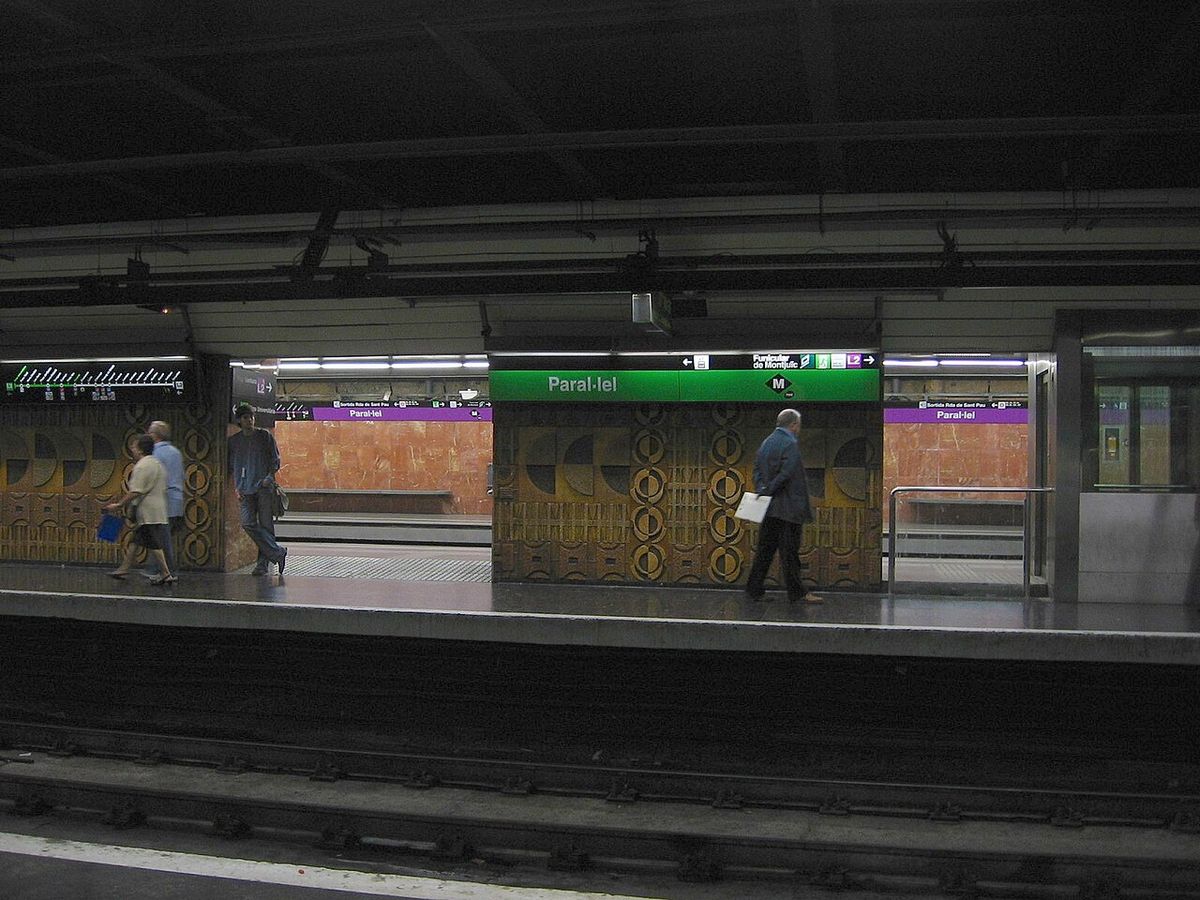
Photo: Montrealais · CC BY-SA 3.0
Barcelona is one of Europe's easiest cities to get around. The metro is fast and frequent, the centre is walkable and you'll almost never need a car. Here's how it works.
Fares and ticket names change from year to year — check the official TMB website for current prices.
From the airport to the city
Barcelona–El Prat airport (BCN) has two terminals, T1 and T2, about 12km from the centre.
- Aerobús — a dedicated express bus from both terminals to Plaça d'Espanya and Plaça de Catalunya, running every few minutes. The simplest option with luggage.
- Metro L9 Sud — connects both terminals to the metro network. Airport stations need a specific airport ticket; standard single tickets aren't valid there.
- Rodalies R2 Nord train — from T2 to Sants, Passeig de Gràcia and other central stations. A free shuttle bus links T1 to T2.
- Taxi — from the official ranks outside arrivals. Airport trips include a supplement; agree nothing in advance with anyone approaching you inside the terminal.
The metro
Eight main lines, colour-coded and numbered, run from around 5am until midnight on weekdays, later on Fridays, and all night on Saturdays. Trains come every few minutes. Most visitors only need a handful of lines:
- L3 (green) — the old town, Passeig de Gràcia, Montjuïc's edge and Gràcia.
- L4 (yellow) — Barceloneta, Ciutadella and Poblenou's beaches.
- L2 (purple) and L5 (blue) — the Sagrada Família.
Which ticket to buy
- T-casual — a 10-journey card for one person, valid on metro, bus and local trains within zone 1, with free transfers inside a time window. The best value for most short visits.
- Hola Barcelona — an unlimited travel card for 2–5 days, including the airport metro. Worth it if you'll ride a lot.
- T-usual — an unlimited monthly pass for residents.
- Contactless — many stations now accept a bank card tap for single fares, but multi-trip cards are usually cheaper.
Buy from machines in any metro station (they have an English option). Keep your ticket until you leave the station.
Buses and trams
The bus network fills the gaps the metro misses, especially on the hills. The H (horizontal), V (vertical) and D (diagonal) lines follow the Eixample grid. Night buses (NitBus) run when the metro is closed. Trams serve Diagonal and the northeast of the city. Your T-casual works on all of them.
Walking and cycling
From the Gothic Quarter to the beach, or from Plaça de Catalunya to the Sagrada Família, walking is often as fast as the metro — and more enjoyable. Barcelona has a growing network of bike lanes, but the public Bicing scheme is for residents only. Visitors can rent bikes and e-bikes from shops all over the centre. Ride in bike lanes, not on pavements.
Taxis and ride-hailing
Official taxis are black and yellow; a green light on the roof means free. They're metered, reasonably priced and can be hailed on the street or booked by app. Ride-hailing services operate with restrictions and can be more expensive than a taxi.
Trains beyond the city
Local Rodalies trains and the FGC network reach the coast, Montserrat and the suburbs; high-speed trains leave from Sants for Girona, Madrid and France. See our guide to day trips from Barcelona.